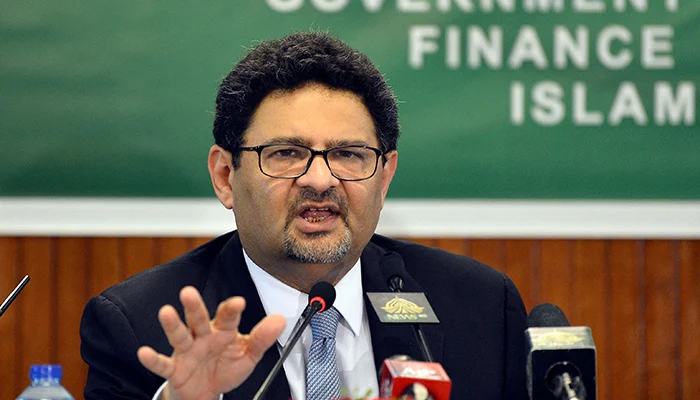
As the National Assembly’s budget session 2022–2023 came to a close, Finance Minister Miftah Ismail emphasized that Pakistan, a nation of 220 million people, would not default in any way and would instead move toward progress and development with the help of Allah Ta’ala.
Speaking on the floor of the House, the finance minister said, “When we came, there were huge subsidies on petrol and diesel. I thank the leadership of the Pakistan Muslim League-Nawaz (PML-N) and other parties for strengthening my hands so that I could take some stringent measures for the betterment of the economy.”
He claimed that the leaders of all the other political parties believed that taking office during a crisis was not in anyone’s best interests, but they still preferred to do so in order to help the nation out of its economic crisis.
According to the finance minister, the government eliminated the tax on cotton seeds by making some changes to the budget. He also claimed that by doing so, the government prevented the country from going into default and gave money to the farmers, who viewed it as an investment.
“The threat of default is now over, and the country is now on the track to development. The government has imposed taxes on small and big shops. Our negotiations with the International Monetary Fund (IMF) are in the final phase,” claimed the finance minister, the government saved the country from going bankrupt by taking tough decisions.
Miftah Ismail also stated that Pakistan would soon become self-sufficient in the production of edible oil. “For the first time in the history of Pakistan, a farmer-friendly budget has been presented by this government,” he added.
Additionally, he claimed that the current fiscal year would be challenging because former prime minister Imran Khan borrowed Rs20,000 billion in loans during the course of his administration.
Miftah explained the government’s taxation of various industries, adding that it did not impose indirect taxes to protect the poor from financial burden. Instead, she added, the government taxed large industries to reduce the budget deficit and avoid borrowing money from international financial institutions.
Miftah Ismail, who was in a good mood at the time, asked the Speaker to acknowledge him for imposing high taxes on the factories run by the sons of his own prime minister.
“My own company will give above Rs200 million in tax. The companies of the prime minister and his sons will also pay high taxes. If we are asking others to pay high taxes, we are doing the same too,” he pointed out.
The finance minister said that the government tried its best to facilitate the people in the budget. “There are as many as nine million retail and wholesale shops in the country. We have devised a strategy to bring at least 2.5 million to 3.5 million of these shops under the tax network,” he added.
“Moreover, under a new scheme, their income tax and sales tax have been fixed to their electricity bills. A fixed tax of Rs3,000 from small shops and Rs10,000 from big shops will be received monthly from these shops with their electricity bills. After that, they will owe nothing to the Federal Board of Revenue (FBR),” he stated.
He added that the government had set a high target for tax collection and that there would be a fixed tax on restaurants as well.
