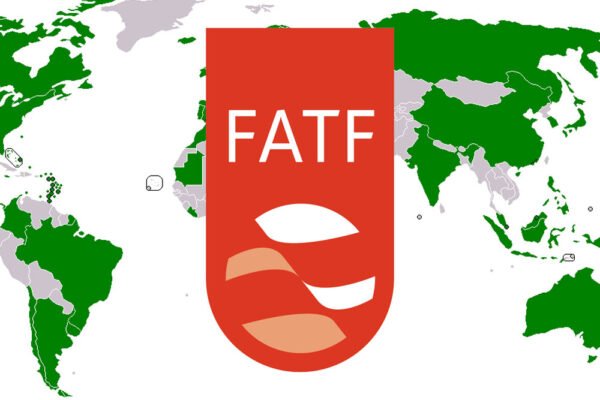
FATf said Friday that Pakistan had “substantially completed” internationally agreed-upon action plans to address their deficiencies to counter money laundering and funding to terrorist groups.
The Paris-based Financial Action Task Force (FATF) 2018 placed the South Asian nation on its “gray list” of countries with weak mechanisms, and Pakistan agreed to work with the agency to strengthen them. The placement made foreign firms more cautious about investing in Pakistan, which is dealing with a struggling economy and a balance-of-payment crisis.
FATF President Marcus Pleyer told a news briefing Friday after its decision-making plenary session in Berlin that they reviewed Islamabad’s progress and concluded it had “largely addressed” two action plans, covering 34 items.
The FATF has now recommended an on-site visit to check that Pakistan’s reforms are in place and can be sustained into the future,” Pleyer said. “Pakistan has been removed from the list after successfully passing the on-site visit.
Pakistan welcomed Friday’s announcement by the global agency and hailed the authorization of the on-site visit “as a final step” for the country “to exit from the FATF’s gray list.”
A Foreign Ministry statement said Pakistan had covered a lot of ground in the anti-money laundering (AML) and counter-financing of terrorism (CFT) regime during the implementation of FATF action plans.
The engagement with FATF has led to the development of a strong AML/CFT framework in Pakistan and resulted in the improvement of our systems to cope with future challenges.
Pakistan’s deposed prime minister Imran Khan, while responding to the outcome of FATF’s plenary session, said it was his government that had set the stage for his country’s possible exit from the gray list.
“We not only averted blacklisting but also completed 32 out of 34 action items. We submitted a compliance report on the remaining 2 items in April based on which FATF now declared Pak’s Action Plan as completed,” Khan wrote on Twitter.
