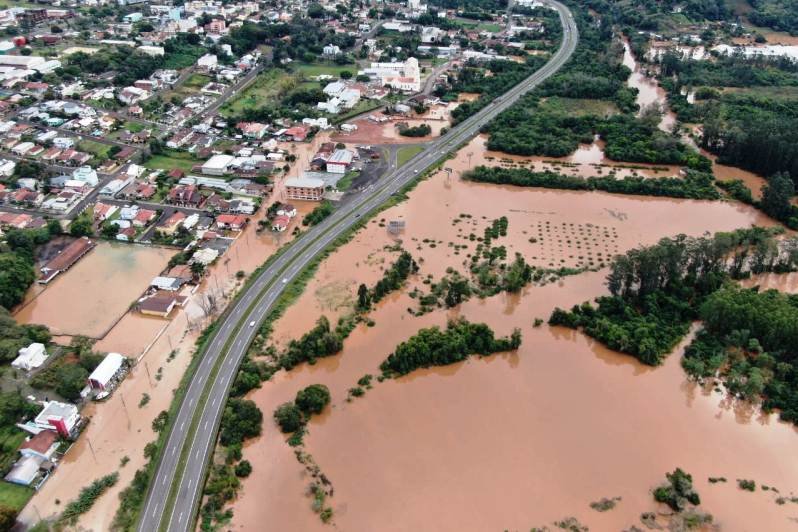
In the midst of ongoing warnings about Pakistan’s pre-monsoon wet spell, Federal Minister for Climate Change Sherry Rehman warned on Tuesday that there is a “clear” risk of urban flooding, particularly in Karachi, Lahore, Multan, Peshawar, and Islamabad.
“Torrential rains are likely in urban areas,” the minister warned in a series of tweets.
According to Rehman, the ministry has directed all federal and provincial authorities to take all possible precautionary measures in order to deal with the potentially disastrous effects of the expected monsoon rains.
Earlier, the National Disaster Management Authority (NDMA) issued a warning to all departments involved to remain on high alert and vigilant as a series of heavy rains is set to begin.
Pakistan will experience monsoon rains until August, according to the climate change minister. “This year, Punjab and Sindh are expected to receive above-normal rainfall,” she said, emphasizing the dire situation in neighboring countries where the monsoon season has already declared a state of emergency, such as India and Bangladesh.
“Geographically, above-normal rain is expected on the foothills of the Himalayas, Azad Jammu and Kashmir, Gilgit-Baltistan, and the central parts of the Punjab region,” Rehman wrote.
“It must also be noted that rivers and streams are also prone to flooding, therefore precautions are to be taken,” she added.
The minister added that the ministry has also issued a glacial lake outburst flood (GLOF) alert to the Khyber Pakhtunkhwa and Gilgit-Baltistan governments due to the global warming issue.
The first spell of pre-monsoon rain in Karachi
As parts of the country begin to receive pre-monsoon rainfall, the Pakistan Metrological Department (PMD) has forecast rain in Karachi with strong winds and thunderstorms beginning this evening.
The first spell of pre-monsoon rain in Karachi is expected to begin today (Tuesday) evening and last until Wednesday, June 22.
Rain is also expected in Hyderabad, Jamshoro, Sukkur, Larkana, Kashmoor, Shikarpoor, Jacobabad, Nawabshah, and other parts of Sindh over the next two days, according to the Met Department.
